
WASHINGTON — The Supreme Court of the United States has struck down President Donald Trump’s executive order eliminating birthright citizenship, upholding the 14th Amendment instead.
Tuesday marked the last day of the Supreme Court’s term and the decision was the last one issued.
The case, Trump v. Barbara, focused on Trump’s order that children born in the U.S. to parents in the country, either temporarily or illegally, are not American citizens, The Washington Post reported.
The majority opinion was written by Chief Justice John Roberts, who said that citizenship dates back to English common law and being “born within the dominions.”
“Citizenship, then and now, was the right to have rights—to freely participate in our political community. The Framers of the Fourteenth Amendment extended that promise to ‘every free-born person in this land,’” Roberts wrote, according to The Associated Press. “We keep that promise today.”
Liberal Justices Sonia Sotomayor, Elena Kagan, and Ketanji Brown Jackson joined Roberts, along with conservative Justices Brett Kavanaugh and Amy Coney Barrett, on the majority opinion.
But Kavanaugh’s dissent threaded a needle, saying that he was “concurring in the judgment,” but also “dissenting in part.” That means, according to CNN, he agrees that the majority of the executive order was unconstitutional, but he disagrees that the statutes are required by the Constitution.
So as CNN noted, the ruling was 6-3, but the court was split 5-4 on whether Congress could vote to do away with birthright citizenship.
But the decision was not unanimous. Three conservative judges dissented — Justices Clarence Thomas, Samuel Alito and Neil Gorsuch — saying the executive order should stand, CNN reported.
Thomas wrote saying the high court’s decision “devalues” citizenship that the writers of the 14th Amendment understood, adding that he was “not sure that today’s opinion will stand the test of time.”
“The Citizenship Clause ‘added greatly to the dignity and glory of American citizenship.’ Today’s opinion devalues that citizenship. I respectfully dissent,” Thomas wrote.
He added that he was “not sure that today’s opinion will stand the test of time.”
The oral arguments were heard in April, over two hours, with the president in the audience in a rare move, the AP reported.
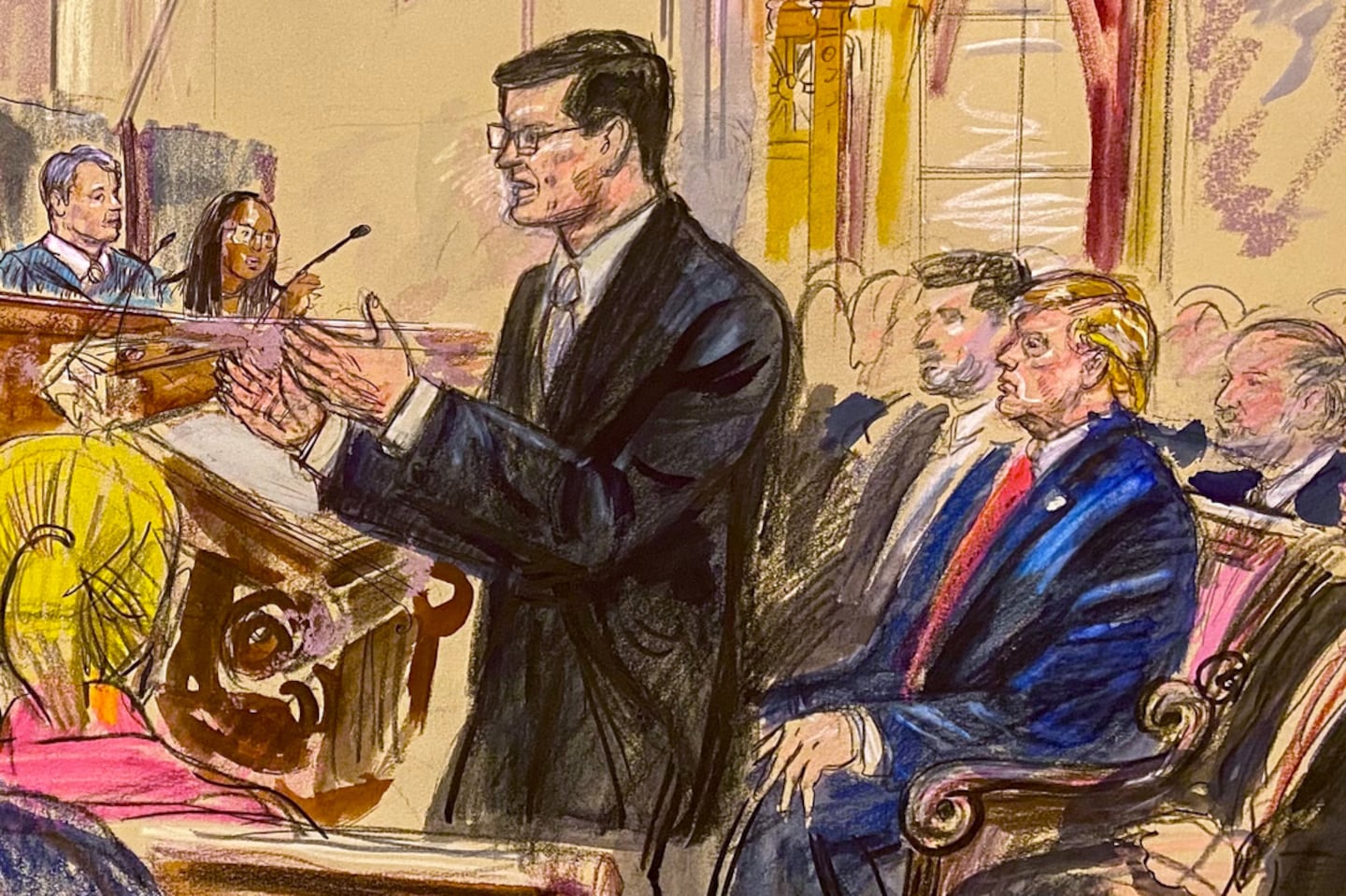
Lower courts had rejected the president’s first-day order, CNN reported. The order, signed on Trump’s first day of his second term in office, prevented people born in the U.S. from getting a passport or other citizenship documents if their parents were not citizens themselves or had a green card.
The 14th Amendment to the Constitution reads: “All persons born or naturalized in the United States, and subject to the jurisdiction thereof, are citizens of the United States and of the State wherein they reside. No State shall make or enforce any law which shall abridge the privileges or immunities of citizens of the United States; nor shall any State deprive any person of life, liberty, or property, without due process of law; nor deny to any person within its jurisdiction the equal protection of the laws.”
In the order, Trump stated, “the Fourteenth Amendment has never been interpreted to extend citizenship universally to everyone born within the United States. The Fourteenth Amendment has always excluded from birthright citizenship persons who were born in the United States but not ‘subject to the jurisdiction thereof.’ Consistent with this understanding, the Congress has further specified through legislation that ‘a person born in the United States, and subject to the jurisdiction thereof’ is a national and citizen of the United States at birth, 8 U.S.C. 1401, generally mirroring the Fourteenth Amendment’s text.
“Among the categories of individuals born in the United States and not subject to the jurisdiction thereof, the privilege of United States citizenship does not automatically extend to persons born in the United States: (1) when that person’s mother was unlawfully present in the United States and the father was not a United States citizen or lawful permanent resident at the time of said person’s birth, or (2) when that person’s mother’s presence in the United States at the time of said person’s birth was lawful but temporary (such as, but not limited to, visiting the United States under the auspices of the Visa Waiver Program or visiting on a student, work, or tourist visa) and the father was not a United States citizen or lawful permanent resident at the time of said person’s birth.”
US District Judge Joseph Laplante, who was put on the federal bench by President George W. Bush, said that the order was “highly questionable constitutionally.” Another judge, US District Judge John Coughenour, who was nominated by President Ronald Reagan, called it “blatantly unconstitutional.”
©2026 Cox Media Group
/cloudfront-us-east-1.images.arcpublishing.com/cmg/XCUXZC2XYZHCRGNNGKFEX6U3LQ.png)


